

CRM for Roofers: The Marketing Layer AccuLynx and JobNimbus Don't Cover
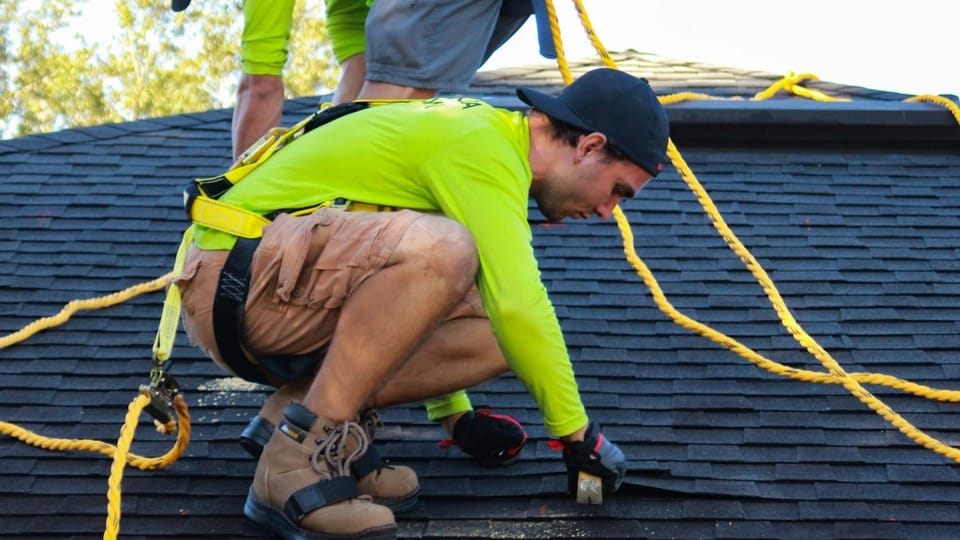
Search "crm for roofers" and AccuLynx, JobNimbus, Roofr and ServiceTitan dominate the top results.
These are purpose-built roofing platforms. They handle aerial measurements, estimate generation, material ordering, production scheduling, crew management, supplement tracking and insurance claim workflows. For running active roofing jobs, they are the right tools.
The marketing gap is what happens before the estimate and what happens after the job is done.
A hailstorm hits a neighbourhood at 2am Tuesday. By 9am Wednesday your competitors with automated storm trigger systems have already sent 800 targeted SMS messages to homeowners in the affected zip codes. You're still pulling a manual list. An insurance claim job completes successfully in August - no review request was sent, no referral ask fired, and by November when the homeowner's neighbour needs a new roof, your name isn't the first one they mention.
GoHighLevel fills this layer. It handles the marketing automation that surrounds your roofing CRM - the lead acquisition, storm triggers and retention sequences that keep your pipeline full between project completions.
TLDR
- AccuLynx, JobNimbus, Roofr and ServiceTitan handle estimates, production scheduling, crew management and insurance supplement workflows
- GoHighLevel handles the marketing layer: storm trigger SMS campaigns, lead follow-up, estimate follow-up sequences, review requests and off-season reactivation
- The two tools serve different parts of the roofing business - many high-volume contractors run both
- GHL Starter at $97/mo replaces separate tools for SMS campaigns, email drips, booking and review management
- Roofing marketing agencies can white-label GHL and offer it to contractor clients
- 30-day free trial available
✅ HighLevel 30-Day Free Trial
Who This Is For
- Residential roofing contractors in storm-prone markets who want to automate lead outreach after weather events
- Insurance restoration specialists who want systematic estimate follow-up and claim status communication
- Roofing companies doing $1M–$10M/year who are running manual marketing campaigns alongside a production CRM
- Roofing marketing agencies managing multiple contractor clients
- Contractors looking to build a steady off-season pipeline through review acquisition and past client reactivation
Where Roofing Contractors Lose Revenue Before and After the Job
Roofing production software handles the job. The marketing gap is before the estimate and after the final invoice.
Before the estimate:
A hailstorm moves through three zip codes on a Monday night. By Tuesday morning, every roofing company in the market is calling the same homeowners. The contractors who win aren't necessarily the best - they're the ones who reach homeowners first with a credible, helpful message. Manual outreach doesn't scale to 500+ homes at 7am. Automated storm trigger campaigns do.
During the estimate pipeline:
A homeowner requests a quote on Tuesday. Your estimator visits on Thursday. The homeowner says they need to check with their insurance company and will get back to you. No one follows up. By the following Tuesday they've signed with a contractor who sent three professional follow-up messages and a timeline comparison.
After the job:
A complete reroof finishes in September. The crew did excellent work. No review request was sent, so the homeowner doesn't leave a Google review. No referral sequence fired, so their neighbour goes to Google Maps when their own roof needs replacing - and your company has 28 reviews vs a competitor's 340.
The numbers:
- Average residential reroof revenue: $8,000–$20,000
- Average insurance restoration project: $12,000–$35,000
- Contractors with 100+ Google reviews receive 3–4x more inbound calls from Google Maps than those with under 50
- Storm-triggered SMS campaigns sent within 24 hours of a weather event convert at 8–12% into booked inspections
Skip trial and error.
Follow a proven onboarding sequence used by agencies.
What HighLevel Does for Roofing Contractors
Storm Trigger Campaigns
GoHighLevel integrates with weather alert data sources via Zapier or webhooks. When a hailstorm or wind event hits a defined geographic area:
- A campaign fires automatically to homeowners in the affected zip codes (from your existing contact list or purchased data)
- SMS: "Hi [Name] - we noticed your area was hit by hail last night. We're offering free roof inspections this week with no obligation. Want to schedule one? [Link]"
- Follow-up SMS at 48 hours if no response: "Still offering free inspections in [Area] - slots are filling fast. [Link]"
The same workflow can pull from storm reports via NOAA data, third-party hail tracking APIs or your own homeowner database tagged by zip code. Contractors who automate storm triggers consistently beat competitors to homeowners by 6–18 hours.
Lead Response and Inspection Booking
Connect your website contact form, Google Ads lead form, or Angi/Thumbtack lead notifications to GoHighLevel. When a new roofing inquiry arrives:
- SMS within 60 seconds: "Thanks for reaching out to [Company] - we'll follow up shortly to schedule your free inspection."
- Email with inspection booking link and a brief overview of your process
- If no booking in 3 hours: follow-up SMS with a direct scheduling link
- If no booking in 24 hours: second follow-up with a social proof message ("We've completed 47 roofs in [Zip Code] this year alone")
Speed matters in roofing lead conversion. The first contractor to make contact wins a disproportionate share of booked inspections.
Estimate Follow-Up Sequences
After an inspection and estimate are delivered, most homeowners need 3–7 days to decide - especially for insurance claims. GoHighLevel runs an automated follow-up sequence:
- Day 1 after estimate: "Just following up on the inspection we completed yesterday - happy to answer any questions about the estimate or the insurance process."
- Day 3: claim status check-in with a brief FAQ on what to expect from the adjuster visit
- Day 7: final follow-up with a financing option or scheduling prompt if work hasn't been booked
Contractors who systemize estimate follow-up typically see 20–30% higher close rates on delivered estimates compared to those following up manually or not at all.
Missed Call Text Back
You're on a job site. A homeowner calls. You can't answer.
Without automation: missed call, they call the next contractor.
With GoHighLevel: SMS fires within 15 seconds - "Hi, this is [Company Name]. Sorry we missed your call - we're on a job right now. What can we help you with? We'll get back to you as soon as we're off the roof."
The tone matters in roofing - "off the roof" is specific, credible and builds instant trust with a homeowner who wants to know they're calling a real crew and not a call center.
Post-Job Review Requests
Seven days after a job is marked complete, GoHighLevel sends:
"Hey [Name] - the crew wanted me to reach out and make sure everything looks great on the new roof. If you're happy with the work, an honest Google review would mean a lot to us and helps other homeowners in [Area] find us. [Link]"
The 7-day delay gives the homeowner time to see the work in daylight and after the first rain. Reviews collected at this window are more detailed and more credible than those requested immediately at completion.
Off-Season Reactivation and Maintenance Campaigns
Every roofing company has a database of past customers who haven't needed work since their last job. That database is pipeline for:
- Spring and fall inspection campaigns: "It's been [X] years since your last roof work - we're offering complimentary inspections this month for past clients in [Area]."
- Gutter cleaning or maintenance upsell sequences
- Annual storm season prep SMS: "Storm season is approaching - if you'd like us to do a quick inspection before the season hits, we have slots available this week."
Past clients who return for a second job or referral are the lowest-cost acquisition channel in residential roofing.
GoHighLevel vs Roofing Production Software
| Function | GoHighLevel | AccuLynx | JobNimbus | Roofr |
|---|---|---|---|---|
| Storm trigger campaigns | Yes | No | No | No |
| Lead fast response (SMS/email) | Yes | No | Limited | No |
| Estimate follow-up sequences | Yes | No | Limited | No |
| Missed call text back | Yes | No | No | No |
| Post-job review requests | Yes | No | No | No |
| Off-season reactivation | Yes | No | No | No |
| Referral automation | Yes | No | No | No |
| Aerial measurement integration | No | Yes | Limited | Yes |
| Estimate generation | No | Yes | Yes | Yes |
| Production / job scheduling | No | Yes | Yes | No |
| Material ordering | No | Yes | Limited | No |
| Insurance supplement tracking | No | Yes | Yes | No |
| Crew management | No | Yes | Yes | No |
| Monthly cost | $97+ | Custom | $174–$374+ | Free–$249+ |
The honest verdict: GoHighLevel does not replace AccuLynx, JobNimbus or Roofr. Aerial measurements, estimate generation, material ordering, production scheduling, crew management and insurance supplement tracking need dedicated roofing software.
GHL handles the marketing automation layer - the campaigns that bring leads in before they hit your production CRM and the retention sequences that keep past clients engaged between projects.
For Roofing Marketing Agencies
GoHighLevel's agency structure maps cleanly to roofing marketing agencies:
- Each roofing contractor client gets their own sub-account - separate pipelines, contacts and campaigns
- Agency has centralised reporting across all clients from one dashboard
- One Snapshot deployed to all clients - consistent storm trigger and post-job automation without rebuilding per client
- SaaS Mode: agencies can white-label GHL and charge each contractor $97–$197/mo for access to their branded marketing CRM
At 10 roofing contractor clients at $147/mo: $1,470/mo recurring from roofing alone.
3-Week Setup for a Roofing Contractor
Week 1 - Lead capture and response:
- Enable Missed Call Text Back - Settings → Phone - 3 minutes
- Build your lead intake form: name, email, phone, zip code, damage type, insurance carrier
- Create pipeline: New Lead → Inspection Booked → Inspection Completed → Estimate Sent → Approved → Job Scheduled → In Progress → Complete → Past Client
- Build lead response sequence: SMS at 60 seconds, email at 5 minutes, follow-ups at 3h and 24h
- Register A2P 10DLC in Phone Settings → Trust Center (allow 1–3 weeks)
Week 2 - Estimate and job automations:
- Estimate follow-up: triggers when pipeline moves to "Estimate Sent" - Day 1, Day 3, Day 7 sequence
- Job completion review request: triggers 7 days after "Complete" stage
- Referral ask: triggers 30 days after Complete stage
- Appointment reminders for inspection bookings: SMS 24h and 1h before
Week 3 - Storm triggers and reactivation:
- Set up storm trigger workflow via Zapier webhook to weather alert data source
- Build storm campaign template: targeted by zip code, 2-message sequence
- Tag past clients by zip code and service date
- Build off-season inspection campaign - schedule spring and fall sends
Revenue Model
| Automation | Volume | Conversion | Avg value | Annual impact |
|---|---|---|---|---|
| Storm trigger campaign | 500 homes/event | 8% book inspection | $15,000 avg job | $600,000/event |
| Missed call recovery | 20/mo | 30% recover | $15,000 | $1,080,000/year |
| Estimate follow-up lift | 15 estimates/mo | +25% close rate | $15,000 | $675,000/year |
| Review requests (indirect) | 8 completions/mo | 50% leave review | Maps rank improvement | Compounding |
| Off-season reactivation | 200 past clients | 4% respond | $10,000 avg | $96,000/year |
Platform cost: $97–297/mo. One additional job per quarter from any of these automations covers years of platform cost.
CRM for Roofers FAQ
What is the best CRM for roofers? For production management - estimates, aerial measurements, crew scheduling, material ordering and insurance supplements - AccuLynx and JobNimbus are the category leaders. For marketing automation - storm trigger campaigns, lead follow-up, estimate follow-up, review requests and off-season reactivation - GoHighLevel handles this layer at $97/mo.
Does GoHighLevel replace AccuLynx or JobNimbus? No. GoHighLevel does not handle aerial measurements, estimate generation, material ordering, production scheduling or insurance supplement tracking. It replaces the separate SMS, email and review management tools you'd otherwise buy alongside your production CRM.
Can I run JobNimbus and GoHighLevel together? Yes. Many high-volume roofing contractors use JobNimbus or AccuLynx for active job management and GoHighLevel for marketing automation - storm triggers, lead follow-up, estimate sequences and review requests. The platforms cover different stages and don't conflict.
How does GoHighLevel handle storm triggers for roofing? Storm trigger campaigns in GoHighLevel are set up via Zapier or webhooks connected to weather alert data sources. When a hail or wind event hits a defined geographic area, an automated SMS campaign fires to homeowners in the affected zip codes from your contact database. First-contact advantage in storm-affected areas is a significant revenue driver for residential roofing contractors.
How much does GoHighLevel cost for a roofer? The Starter plan is $97/mo. SMS campaigns add usage costs - at $0.008 per message, a 500-homeowner storm campaign costs approximately $4. A2P 10DLC registration adds a one-time $4 fee.
What roofing marketing automations have the highest ROI? In order: (1) Storm trigger campaigns - reaching homeowners within hours of a hail event converts at 8–12% into booked inspections. (2) Estimate follow-up sequences - systematic follow-up increases close rates by 20–30%. (3) Missed call text back - captures leads that would go to competitors while you're on a job. (4) Post-job review requests - directly compounds Google Maps visibility and organic inbound call volume.
Can roofing marketing agencies white-label GoHighLevel? Yes. GoHighLevel's SaaS Pro plan ($497/mo) allows full white-labeling. Agencies can deploy a standardized roofing Snapshot to all contractor clients and charge $97–$197/mo per client for access to their branded CRM.
Internal Links
- CRM for Contractors: The Marketing Layer Buildertrend and Jobber Don't Cover
- CRM for HVAC Companies: The Marketing Layer Most Owners Are Missing
- Missed Call Text Back Software: Best Tools Compared 2026
- Marketing Automation for Small Business: Replace 5 Tools with One at $97/mo
- GoHighLevel for Small Business: What It Does and Whether $97/mo Is Worth It
✅ HighLevel 30-Day Free Trial
Claim Your Free Month
What's New in GoHighLevel
Pipeline Kanban: Collapse and Resize Stages (March 2026)
Stages in the Opportunities Kanban view can now be collapsed, expanded and resized - with layout preferences saving per user. For roofing contractors running large storm-season pipelines with hundreds of active leads across inspection, estimate and job stages, this removes visual clutter and lets the team focus on the stage that matters most on any given day.
Appointment Booking Upgrade Inside Opportunities (March 2026)
GoHighLevel now uses the full appointment modal inside Opportunities for creating and editing inspection bookings. Scheduling or rescheduling an inspection is now possible directly from a homeowner's pipeline card without switching to the Calendar view - useful during high-volume storm response periods when speed of follow-up matters.